Associations’ Existential Crisis — and How to Fix It
By Carla Kalogeridis, PAR
Associations’ Existential Crisis — and How to Fix It
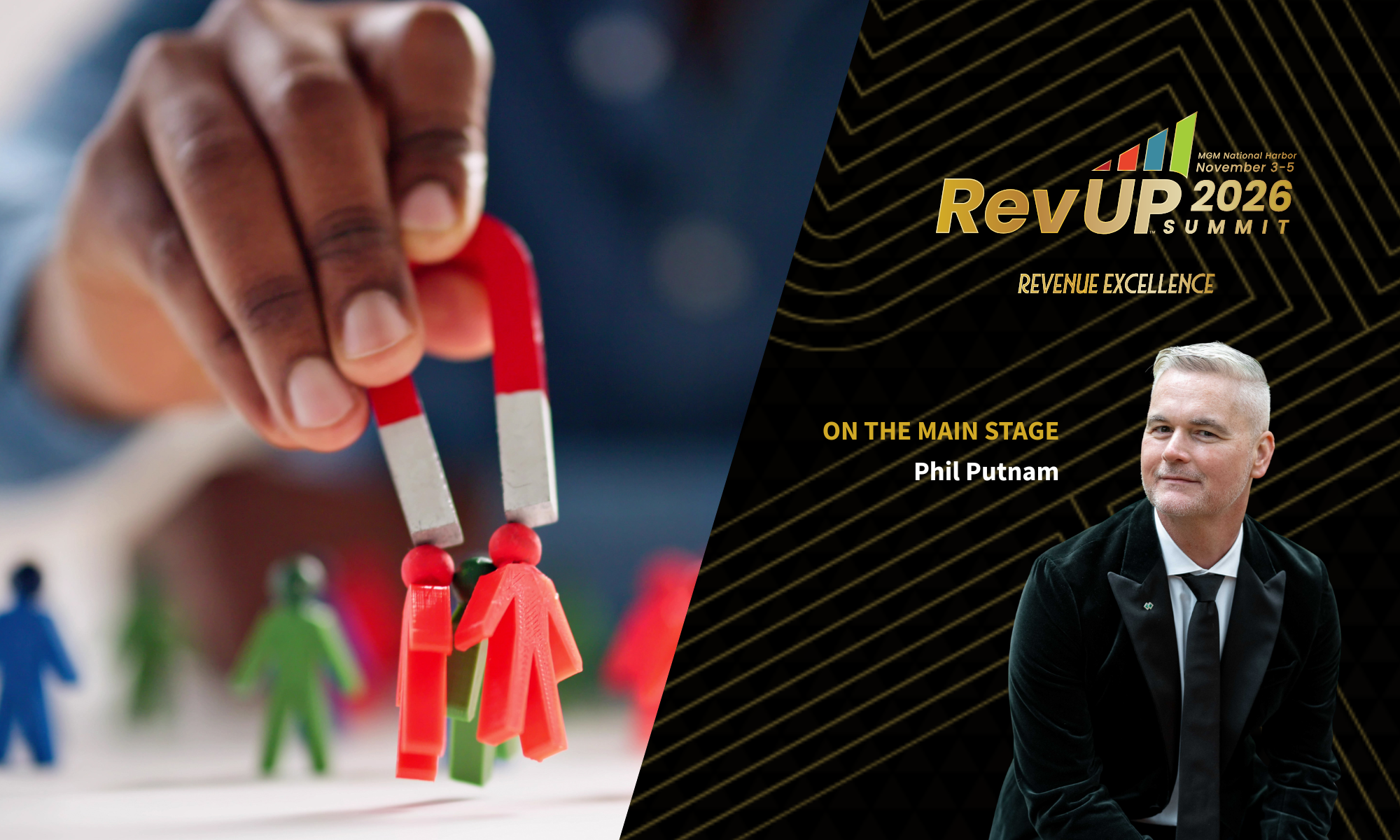
RevUP 2026 Keynoter Phil Putnam Shares What Associations Need to Do to Survive Past 2035
Phil Putnam says there's a real existential crisis of association membership and revenue, and we only have 9–12 years to change it. Hint: “Participation is no longer its own virtue, and there's no more, ‘If we build it, they will come,'" warns Putnam, PAR’s RevUP Summit 2026 keynoter.
In this exclusive interview with PAR, the speaker, author, and cross-generational leadership expert provides exactly what you need to do if you want your association to exist past 2035.
PAR: What are your thoughts about the new generation entering the workforce, and how will they impact association membership growth?
Putnam: When associations think about growing membership, it’s really important to make sure you understand Gen Z — and here’s why. First, they are quickly becoming the largest portion of the global workforce. They're currently 29%, and they'll be 31% of it by 2035. So only nine years from now, Gen Z will be the largest portion of the workforce and the largest portion of the customer base for associations.
The first thing to know is that we need Gen Zers. They are the key to our future. The second thing to understand is that they are currently 14–29 years old, so well over half of the generation doesn't even know what they want their profession to be yet, let alone who they are as individuals. They're still becoming, and that's great, right? But most associations start all their work, membership efforts, and marketing from the assumption that the person has already chosen the profession and decided that being devoted to a profession is worthwhile. That is not the case for Gen Z yet — partly because of their age and partly because work is just not worth what it used to be.
PAR: What do you mean by that?
Putnam: I mean that literally. Raises don't beat natural inflation. A 401(k) plan that says we'll match 6% of your contributions after you work here for six years — well, most people don't work anywhere for six years anymore. Gen Zers have legitimate reasons to question the messaging that being devoted to a career gives you the ability to get the life you want. Association leaders need to understand that when you are pursuing Gen Zers as customers and members, the membership-first route is often not the most effective approach. Associations have the opportunity to be part of Gen Zers’ process of considering and choosing the profession.
Gen Zers still don't know if they're going to stay in their profession — they don't know if it's worth it. That's why there's this classic battle between selling membership or selling product. I think when pursuing Gen Z customers, you sell product and then you sell membership.
PAR: Give us an example of how that might work.
Putnam: “Come to our annual convention because it'll help you grow your career.” That's the typical messaging. But to somebody who has not yet chosen their profession or who is deeply uncomfortable in most social settings, that's a hard no. They don’t see value in that value prop. But if you say, “Hey, come to this conference because it could be part of the process of you deciding whether this is your profession, and also you don't have to be a member to come,” then that
might get that person through your door. You get to participate in their journey and perhaps get some revenue from them. If they don't decide to join your profession, that's fine because they're going to go where they need to go, and that's the most important thing.
Decide what age cohorts you need for your association’s business goals, and then understand what messaging is meaningful to them by understanding their relationship with themselves.
PAR: That’s a big shift.
Putnam: It is a big shift. Gen Zers are very focused on values, and they require a high level of value alignment with the organizations they connect with. Take the event industry. There has been a lot of friction in the last couple years around where certain events are located — or who hosts or sponsors certain events — and the values and ideologies associated with those locations, sponsors, or hosts. When you ask a Gen Zer with a clear sense of values to go to an event in a location that is openly hostile to that value, they're more likely to say no — even if that event could provide them value in their work and career. Associations must be willing to consider that when making those choices.
For the most part, association membership efforts are focused on messaging that is meaningful to the people they have — not the people they need. If an association makes that shift, they will find themselves succeeding meaningfully with bringing in Gen Z membership, which is the unequivocal path to associations existing past the year 2035.
Think of it this way: By 2035 Baby Boomers will statistically be entirely out of the workforce, and Xers will only be 21%. But right now 56% of association members are those two generations, so we're getting the largest portion of our membership and revenue from the smallest portion of the workforce — the portion that will be leaving the soonest due to retirement. There's a real existential crisis of membership and revenue, and we only have 9–12 years to change it, which in association time is like 6 minutes.
PAR: What needs to change for associations to connect with younger generations?
Putnam: We have to accept the fact that participation is no longer its own virtue, and there's no more, “If we build it, they will come,”— which is why leading your revenue efforts with membership rather than product is not usually successful. Twenty years ago, when you got your nursing degree, you got your diploma, your union card, and your nurse's association membership card. Now two of those pieces of paper are guaranteed — diploma and union — but association membership, that's not a guarantee anymore. Associations have to market themselves in ways they haven't had to market before, and that's why their attention must be on change — because their available customer base has changed.
A nonprofit is a business, an association is a business, and that's personally why I'm so passionate about PAR: because it raises the business acumen of association leaders, and that's a wonderful, critical service.
PAR: If you were a membership director, what percentage of your marketing resources would you spend on this rising generation of professionals?
Putnam: Most associations are spending on average 2% of their budget on Gen-Z-specific efforts, but I don't find many associations actually segmenting their marketing efforts on a generational basis. They're still saying, “This is what we do for our members,” rather than saying “These are the members we need to achieve our business goals over the next 10 and 20 years, and this is what our value proposition is for them.”
What I would recommend — and this is going to sound extreme — is to focus 30–40% of your entire budget and membership and product efforts exclusively on Gen Z. They are rapidly becoming 30% of your available customer base, and associations that cannot bring in Gen Zers as meaningful members within the next decade will not exist long past 2035.
Ask yourself: Do I want this association to continue to exist? If the answer is yes, you need to really figure out how to meaningfully serve Gen Z. It’s a massive shift, but it's also a massive risk if you don’t. It’s time to get in the game.
PAR: Give us a preview of what you'll be talking about at RevUP.
Putnam: I'm going to help association leaders understand each generation's relationship with employment so that they can then understand how to empathetically approach each generation and drive meaningful results. We’re going to look at these questions: Who are our members? Who belongs here, who do we go after, and what do we sell to them? We will look at membership and product as routes to revenue. Attendees will walk away with an understanding of what will resonate with each generation and how to apply it in a membership-led and product-led pursuit of revenue.
PAR: RevUP is not until November, so what are some actionable steps associations can take if they want to get started now?
Putnam: Start leveraging product-first revenue efforts. This does not mean replacing membership-first revenue efforts, but it means identifying the age cohort that you need — and remembering that Gen Z is absolutely one of them. Then have some product-first efforts to bring them into the fold. That will be a more effective approach for generating revenue, and it will produce membership as well.
The second thing is get mentored by a Gen Zer. Truly take in their perspective and let it change your behavior. Usually, we look at mentoring only going from older to younger, but reverse mentoring helps you move from frustration to curiosity — and curiosity is the absolute jet fuel of effective cross-generational leadership. Reverse mentoring adjusts the assumption that time and experience are the only pathways to valid insight. We have to break the belief that age is the only pathway to validation because if you want to know how to sell something to a Gen Zer, you need to talk to a Gen Zer.
If you don't believe that a young person is going to have valid insight for your business, you're missing a huge source of power.
Hear Phil Putnam Speak at RevUP
Don’t miss Phil Putnam’s keynote at PAR’s RevUP Summit 2026 from Nov. 3-5 at MGM National Harbor, Maryland. Putnam will break down what resonates with each generation and how to apply it in a membership-led and product-led pursuit of revenue. Register here and take advantage of early-bird pricing.